Laser Printer Cost Per Page: What Home Users Pay
To find a laser printer's cost per page, divide the price of a toner cartridge by the number of pages it's rated to print. Paper and power add a little more, so the full cost runs above the toner figure alone.
On this page (10 sections)
- How to work out the cost per page
- How often a cartridge runs out
- Why the high-yield cartridge often wins
- Why duplex printing lowers paper use
- Color printers use more than one cartridge
- What else adds to the cost
- A worked example you can copy
- How laser costs compare with inkjet
- Common mistakes when comparing cost per page
- So what does a laser printer cost per page?
To find a laser printer's cost per page, divide the price of a toner cartridge by the number of pages it's rated to print. Paper and power add a little more, so the full cost always runs above the toner figure alone.
How to work out the cost per page
The formula is simple. If a cartridge costs a certain amount and is rated for 3,000 pages, each toner page costs that amount divided by 3,000.
Use the rated yield from the box or the maker's specs, and keep the price in the same units you use for the page count. A cost per page built on a rough guess is only as good as the numbers behind it.
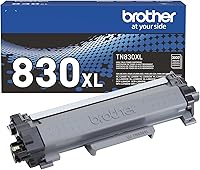
Cost per page starts with Brother's yield ratings
Brother rates the TN-830 standard cartridge at up to 1,200 pages. The TN-830XL high-yield cartridge is rated at up to 3,000 pages, and both sit in the same family for the HL-L2460DW and DCP-L2640DW.
Real pages vary. Brother's own notes on its TN-760 say the toner yield may vary by use, and that holds for every cartridge, so treat any rating as a guide.
How often a cartridge runs out
Replacement time depends on how many pages you print each month. At 300 pages a month, a cartridge rated for 3,000 pages lasts about 10 months, and one rated for 1,200 pages lasts about four.
Those are rated pages, so real results can run shorter or longer. Track your own usage for a few months, and use that figure in your cost math.
Why the high-yield cartridge often wins
A high-yield cartridge costs more up front but prints more pages from one box. That makes it a strong choice for steady printing, since you replace it less often.
The standard cartridge suits lighter printing, where a cartridge lasts a long time between changes. Run the division with the prices you see, because the answer depends on both prices.
Our Brother toner guide shows which code fits which model, so you match the cartridge before you compare yields.
Why duplex printing lowers paper use
Automatic duplex printing puts text on both sides of a sheet, so one sheet does the work of two. That cuts your paper bill and the number of sheets you feed through the printer.
It doesn't change the toner used for each printed side, so the toner cost per page stays about the same. The saving shows up in paper, which is the other half of the full cost.
Color printers use more than one cartridge
A color laser uses separate cyan, magenta, yellow and black toners. Each color has its own yield, so the cost per page depends on which colors you print most.
A mono laser has one toner to track. That's why many people who print mostly text pick a black and white model, and our color vs black and white laser printer guide covers the trade-off.
What else adds to the cost
Paper is the next cost after toner. Glossy or specialty sheets cost more than plain copy paper, so check the price per sheet as well as the toner price.
Power is small for most home printers, but it adds up on a printer that runs all day. The ENERGY STAR program rates office equipment, including printers, for energy use, so look for that label when you compare models.
Drum units also cost money over time, and they're a separate item from toner. Our drum replacement guide explains how to plan for that.
A worked example you can copy
Work out two figures for every printer on your list, then add them together. Keep the steps the same for each printer so the comparison stays fair.
- Toner cost per page: the cartridge price, divided by its rated pages.
- Paper cost per page: the price of one sheet, divided by 2 if you print two-sided, since one sheet carries two pages.
Add the two figures to get the full cost of one printed page. Then do the same math for the next printer or cartridge.
How laser costs compare with inkjet
Laser and inkjet costs are hard to compare on page yield alone, because they use different supplies and yield ratings. Run the same division for each supply, then add paper and power to both.
Our laser vs inkjet guide for home use walks through the full comparison. If you want the whole set of picks, start with the pillar guide.
Common mistakes when comparing cost per page
Most comparisons go wrong in a few predictable ways. Watch for these before you trust a number.
- Comparing cartridge prices alone: the price means little without the rated yield beside it.
- Mixing yield bases: a standard yield for one printer and a high yield for another skews the result.
- Forgetting paper: every sheet adds to the cost, and duplex halves the sheets for the same pages.
Use the same yield basis and the same paper cost for each printer, so the comparison stays fair.
So what does a laser printer cost per page?
The toner cost per page is the cartridge price divided by its rated yield. For steady printing, a high-yield cartridge often gives the lowest toner cost, but you still need to run the numbers with the prices you see.
Before you buy, check the yield, the price, the duplex setting and how many colors you print. Those four points decide most of the cost.
Frequently asked questions
What is a good laser printer cost per page for home use?
There isn't one number that fits every home, so work out the toner cost with your own cartridge price and its yield. Then weigh that figure against how often you print and how many pages each job runs.
Does a high-yield toner cartridge always cost less per page?
Usually, but not always, so divide each cartridge's price by its rated yield and compare the two results. The high-yield cartridge often wins for steady printing, but the math settles it for the prices you see.
Does duplex printing lower the cost per page?
It lowers the paper you use, since one sheet carries two pages. It doesn't cut the toner used for each printed side, so the toner cost per page stays about the same.